
Pink salt water is water with dissolved Himalayan pink salt and optional lemon juice. It takes about a minute to mix, but it is not a weight-loss treatment, a detox, or a necessary daily hydration habit. Its main nutritional consideration is added sodium.
Before making it: if you have been told to limit sodium, or have high blood pressure, kidney disease, or a heart condition, ask your healthcare professional before adding salt drinks to your diet. Plain water or unsalted lemon water avoids the added sodium.
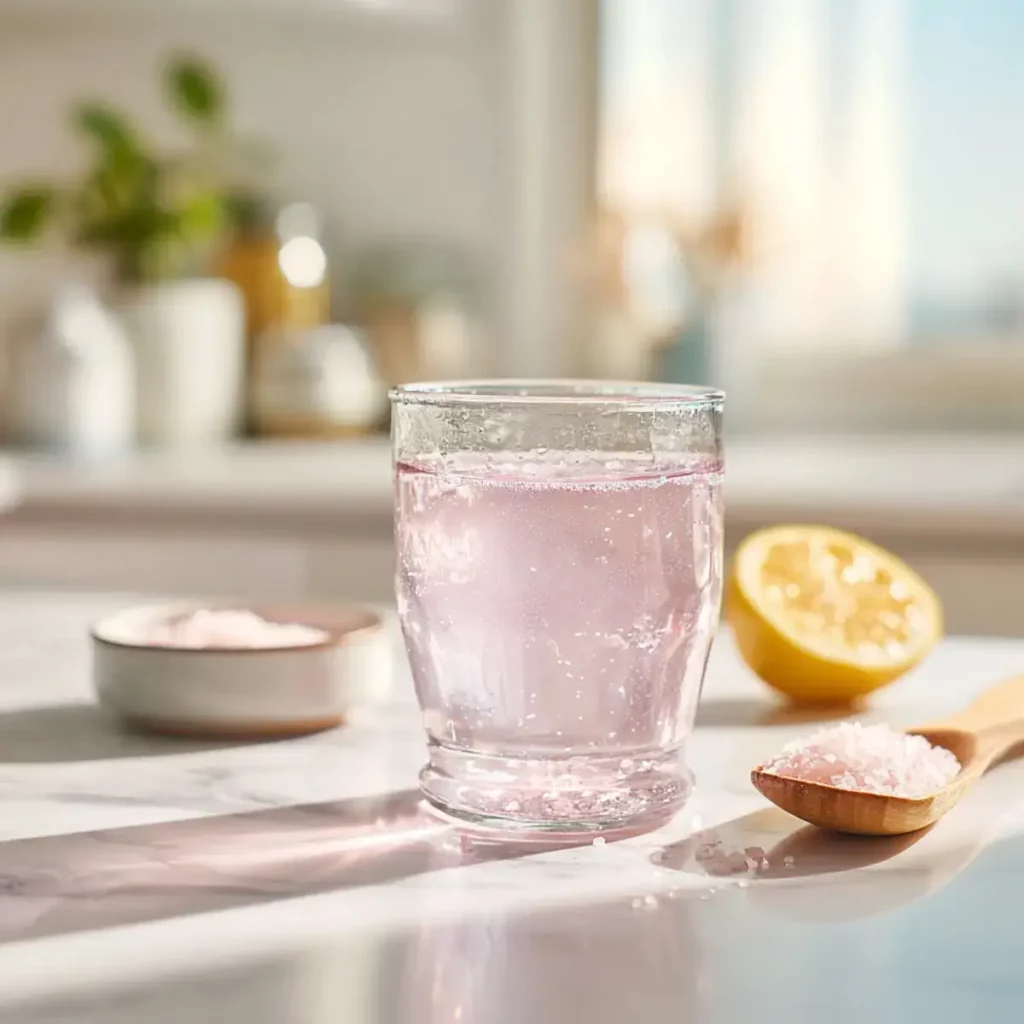
What Pink Salt Adds
Pink salt adds a salty taste, not a demonstrated fat-burning effect. Its trace minerals are not a reason to choose it as a health treatment. The FDA explains that sodium intake matters for blood pressure. A drink can be very low in calories and still contribute a substantial amount of sodium.
There is no need to avoid ordinary food-grade table salt because it contains permitted additives. Different crystal sizes pack differently into a measuring spoon, so substitutions should account for weight and the product’s sodium label, not color.
Ingredients and Sodium
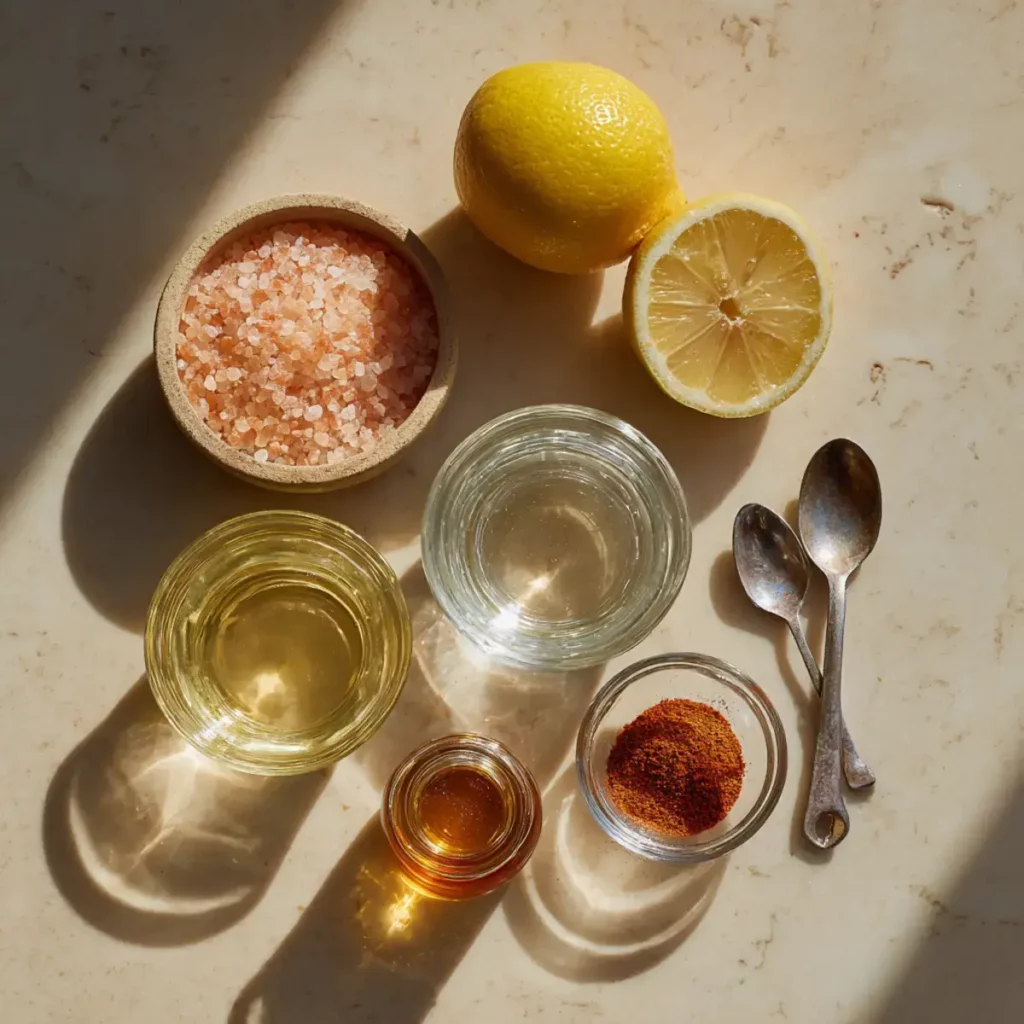
The existing recipe uses 1/4 teaspoon fine Himalayan pink salt, approximately 1.5 grams, in 8 fluid ounces (240 ml) water. Optional additions are 1/2 teaspoon lemon juice or apple cider vinegar and a dash of cayenne. These are flavor choices, not ingredients needed for a health effect.
The card estimates about 581 mg sodium per serving. Treat that as an estimate: crystal size, measured weight, and brand affect the amount. Adding more water dilutes the taste but does not remove sodium from the glass. Salt-free lemon water is the lower-sodium alternative.
Mixing the Drink
Pour the water into a glass, add the measured salt, and stir until dissolved. If using lemon or vinegar, mix it into the full glass of water rather than drinking it undiluted. Cayenne is optional and can be omitted, particularly if spicy drinks bother you.
There is no established advantage to drinking this on an empty stomach or immediately after waking. It is not a substitute for a clinician-recommended oral rehydration solution, and this recipe should not be used to treat dehydration.
Flavor Options
For a citrus flavor, use the optional lemon juice. For a less sharp version, leave out vinegar and cayenne. If the saltiness is unpleasant, do not force yourself to drink it for a supposed benefit; choose plain water or an unsalted infusion instead.
For a different option, see lemon cucumber water or cinnamon apple tea. These are flavor alternatives, not fat-burning drinks.
Common Questions
Does pink salt water help with weight loss? This recipe has no established weight-loss benefit. Its low calorie count does not mean it burns fat or speeds up metabolism.
Should I drink it every day? This article does not recommend a daily salt-water routine. Consider your total sodium intake and any individual medical restrictions.
Does it break a fast? Fasting requirements differ. Optional lemon or vinegar introduces ingredients beyond plain water; follow the instructions for your particular fast, especially before a medical test or procedure.
Can I use regular salt? Food-grade table salt is not inherently unsuitable. However, switching salts does not turn salt water into a health treatment, and volume-for-volume substitutions can change the sodium amount.
Serving and Storage
Make a single portion with clean drinking water and a clean glass. If lemon or other fresh ingredients are added and the drink is not used promptly, refrigerate it. Do not rely on claims that salt makes a homemade beverage safe to keep at room temperature.
The recipe is retained for readers looking for the mixture by name. The earlier weight-loss wording in its URL is not a health claim. Nutrition values are estimates and should not replace the sodium information on your own salt package.
FROM YOUR KITCHEN
Reviews & comments